
2026-10-28 · Javier Soto
Using Moisture Meters on Drywall in Fontana Restoration Projects
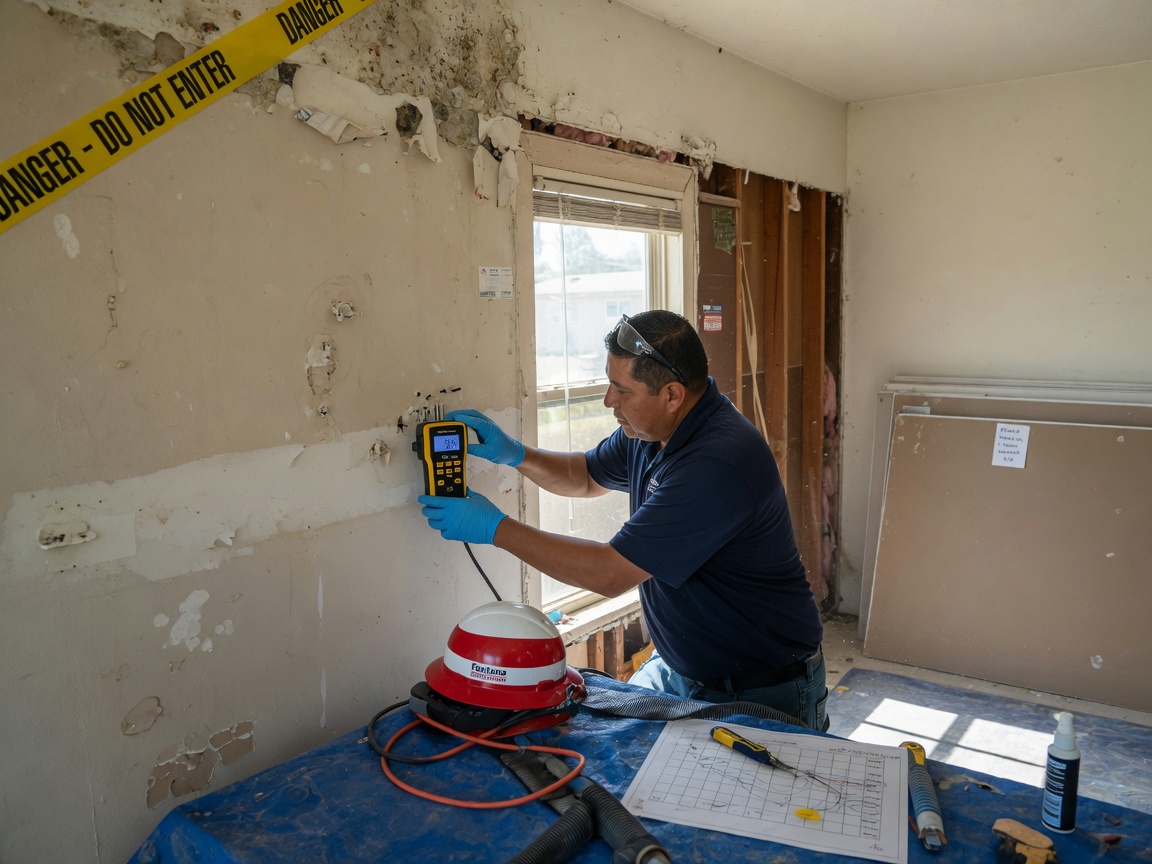
In Fontana restoration projects, moisture meters show drywall as dry when readings fall below 1% moisture content on pinless models or under 15% on pin-type meters calibrated for gypsum, allowing crews to proceed with repairs without risking hidden mold growth.
Selecting the Right Meter for Drywall Work
Pin-type meters insert probes into the drywall surface to measure electrical resistance between points, giving precise readings at specific depths in older homes found in South Fontana and Downtown Fontana. Pinless meters use electromagnetic sensors to scan larger areas without surface damage, which suits the textured walls common in North Fontana tract homes built after 1980. Both types require calibration against known dry samples before use on jobs near Fontana City Hall or along routes to Auto Club Speedway. In the hot-summer Mediterranean climate, daytime heat above 95°F can create surface dryness while deeper layers retain moisture, so crews switch between meter types to verify full wall thickness. This approach prevents callbacks when humidity spikes overnight in San Bernardino County valleys.
Reading and Recording Data on Site
Operators take multiple readings at 12-inch intervals across affected drywall sections, logging the highest value in each room to map moisture pockets left by leaks from roofs or appliances. In Rancho Cucamonga and Rialto homes with stucco exteriors, water often travels laterally behind drywall, so vertical scans from floor to ceiling catch migration paths missed by single-point checks. Documenting readings every four hours during the drying phase tracks progress against the target below 1% or 15% threshold. Local soil conditions with low permeability in parts of San Bernardino County slow drainage after heavy winter rains, extending the time needed for interior walls to reach safe levels. Consistent records support decisions on whether to remove baseboards or cut sections for better airflow.
Accounting for Climate and Housing Factors
Fontana's hot-summer Mediterranean climate drives rapid surface evaporation in summer months yet traps moisture inside walls during cooler, humid periods common near the San Bernardino mountains. Older drywall in South Fontana neighborhoods installed before 1970 often contains higher paper content that holds water longer than modern gypsum boards. Crews adjust meter interpretation for these variables by comparing readings against unaffected walls in the same structure. Nearby cities like San Bernardino experience similar patterns, where wind-driven rain through older window seals creates hidden saturation behind drywall. Adjusting for these realities ensures meters reflect true conditions rather than temporary surface states caused by afternoon heat.
Linking Readings to Next Restoration Steps
Once meter data confirms drywall moisture below the safe threshold, teams move to structural drying equipment removal and surface prep for refinishing. Persistent readings above target levels trigger further investigation, often leading into full water damage restoration protocols that include material removal. In homes showing repeated high readings after appliance leaks, crews reference patterns discussed in Mold Risks After Appliance Leaks in Fontana Kitchens to decide on remediation scope. When burst pipes affect older stock, the guide in How to Handle Burst Pipe Water Damage in Older Fontana Neighborhoods outlines additional meter checks before closing walls. These measurements keep every phase grounded in actual moisture data rather than assumptions.
Verifying Dryness Before Final Repairs
Final verification involves rechecking all previously wet areas 24 hours after equipment shutdown to confirm no rebound above 1% or 15%. This step catches residual moisture in cavities around electrical boxes or at floor plates common in Fontana construction. Only after stable low readings do restoration teams proceed with new drywall installation or painting. The 24-hour wait accounts for the region's temperature swings that can redistribute moisture overnight. Accurate meter use throughout the project reduces the chance of callbacks in neighborhoods from North Fontana to adjacent Rialto.