
2026-10-28 · Javier Soto
Water Damage Signs After Winter Rains in Fontana Homes
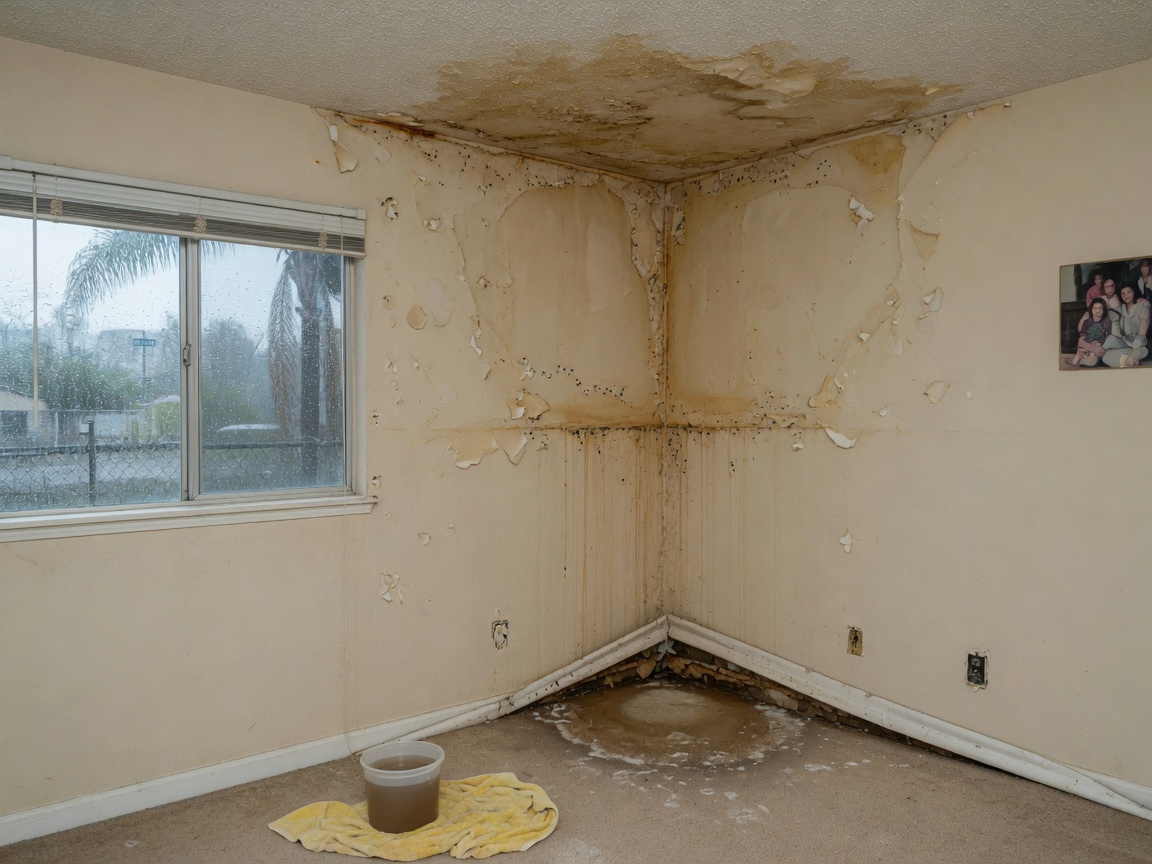
After winter rains in Fontana, homeowners commonly notice ceiling stains, wall discoloration, or musty smells within 48-72 hours as moisture seeps into older drywall and flooring. These signs appear frequently in South Fontana and North Fontana where many homes built before 1980 sit on concrete slabs that channel runoff toward foundations near the Auto Club Speedway. Checking these areas right after storms helps catch issues before they spread to adjacent rooms.
Ceiling and Wall Stains
Winter rains in the hot-summer Mediterranean climate of San Bernardino County often push water through roof penetrations and window seals in Downtown Fontana homes. Look for yellow-brown rings on ceilings or bubbling paint along walls in living areas and bedrooms. These marks typically form where water pools for days before evaporating, especially in single-story ranch houses common throughout the region. In South Fontana, older stucco exteriors can crack from repeated wet-dry cycles, allowing moisture to reach interior framing. Inspecting attics with a flashlight after each storm reveals wet insulation or darkened wood joists that indicate ongoing intrusion. Addressing these early avoids the need for larger repairs later in the season.
Musty Odors and Hidden Mold
Persistent earthy smells after rains point to trapped moisture behind baseboards or in crawl spaces of North Fontana properties. The region's winter precipitation often saturates soil around foundations, creating conditions where mold colonies develop within 5-7 days on damp drywall. Residents near Fontana City Hall report odors strongest in bathrooms and laundry rooms where ventilation is limited. Using a moisture meter on walls helps confirm readings above 15% that signal hidden growth. In nearby Rialto and Rancho Cucamonga, similar patterns appear in homes with attached garages where rainwater enters through door thresholds. Mold remediation becomes necessary once odors persist beyond a week.
Foundation Cracks and Floor Issues
San Bernardino County soil expands and contracts with seasonal rains, stressing foundations in Fontana homes built on older lots. Hairline cracks in garages or basements often widen after heavy winter downpours, allowing water to enter under flooring. South Fontana neighborhoods see this frequently in homes from the 1960s where original drainage slopes have settled over time. Check for soft spots in carpet or buckling hardwood near exterior doors. Emergency water extraction limits further damage when water pools against these entry points. Linking to seasonal patterns, readers may also review seasonal water damage prevention for Fontana garages to protect vehicle storage areas from similar runoff.
Runoff Near Local Terrain
Properties close to the Cajon Pass experience increased sheet flow during winter storms that funnels water toward lower-lying homes in North Fontana. This terrain-driven pattern saturates yards and pushes moisture against stem walls, creating efflorescence on concrete surfaces. Checking downspout extensions and grading around the house perimeter reveals where water is directed back toward the structure. In areas like Rialto, older drainage systems struggle with the volume, leading to standing water against siding. Protecting your Fontana property from runoff near the Cajon Pass offers additional steps tailored to these conditions. Early detection keeps repairs focused on affected sections rather than whole-home work.
When to Call for Assessment
If stains spread more than 12 inches or odors remain after ventilation, contact a local team for inspection. Quality Construction Restoration operates 24 hours from Fontana, CA and serves surrounding cities including San Bernardino. Prompt checks in affected rooms prevent escalation into larger structural concerns common after repeated winter cycles.