
2026-10-28 · Javier Soto
Protecting Your Fontana Property From Runoff Near the Cajon Pass
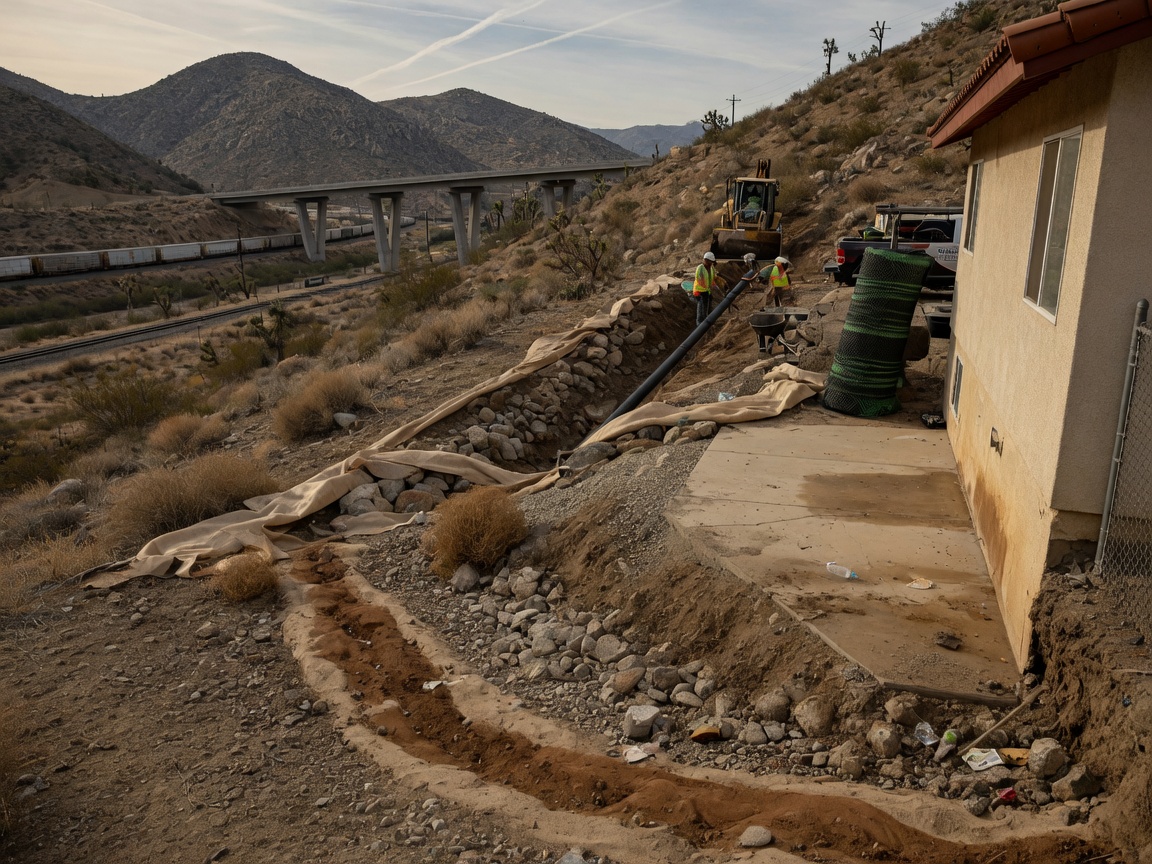
Protecting your Fontana property from runoff near the Cajon Pass begins with evaluating slope direction and installing diversion channels before winter rains arrive in the hot-summer Mediterranean climate. Properties in North Fontana often sit on steeper grades that channel water from the pass toward foundations, while older homes in South Fontana and Downtown Fontana feature flat lots that pool water quickly during storms.
Understanding Runoff Patterns From the Cajon Pass
The Cajon Pass funnels water southeast into Fontana during heavy winter storms, increasing flow across San Bernardino County terrain that includes rocky foothills and older residential pads. Homes near the Auto Club Speedway and Fontana City Hall face sheet flow that saturates soil and pushes against crawl spaces or slab edges. In a typical season, 10–15 inches of rain can arrive in short bursts, overwhelming gutters and sending water across driveways into South Fontana yards. This pattern differs from the flatter basins in Rancho Cucamonga or Rialto, where runoff spreads more slowly but still saturates older concrete foundations common in 1960s–1980s housing stock.
Assessing Vulnerability on Local Properties
Walk the perimeter after the first rain and note where water collects within 10 feet of the foundation. Check downspouts that discharge directly onto soil in North Fontana lots, which often lack French drains. Older homes in Downtown Fontana frequently have settled grading that directs flow toward garage slabs. Measure the distance from roof edges to the nearest low point; anything under 5 feet increases risk of water entering wall cavities. Properties along routes to San Bernardino experience added volume from upstream streets that lack modern curb drains.
Installing Drainage and Diversion Measures
Grade soil 6 inches over 10 feet away from the house and add 4-inch perforated pipe wrapped in filter fabric to carry water to a daylight outlet or dry well. Install splash blocks or extend downspouts 6–8 feet from the foundation on South Fontana homes where clay soil holds moisture. On steeper North Fontana parcels, a shallow swale lined with river rock can intercept sheet flow before it reaches the house. These steps reduce standing water that leads to water damage restoration calls during peak storm months.
Seasonal Maintenance Before Winter Rains
Clean gutters and downspouts every October and again in January to handle the concentrated rainfall typical of the region. Inspect and re-seal expansion joints around slabs in older Fontana neighborhoods where soil movement widens gaps. Trim vegetation that blocks drainage paths along property lines near the Cajon Pass corridor. Keep storm drains clear on streets leading toward Rialto and San Bernardino so upstream water does not back up onto residential lots. Consistent checks prevent minor runoff from turning into interior moisture issues that require storm damage restoration.
When Professional Help Becomes Necessary
If water reaches interior walls or saturates subflooring after a single storm, contact technicians who understand local soil and housing conditions. Persistent dampness in crawl spaces of 1970s-era homes often signals failed perimeter drainage that needs excavation and re-piping. Early intervention limits mold growth and structural softening that can appear weeks later in South Fontana properties. For guidance on related issues such as roof-related intrusion, review Water Damage From Roof Leaks During Santa Ana Winds in Fontana.