
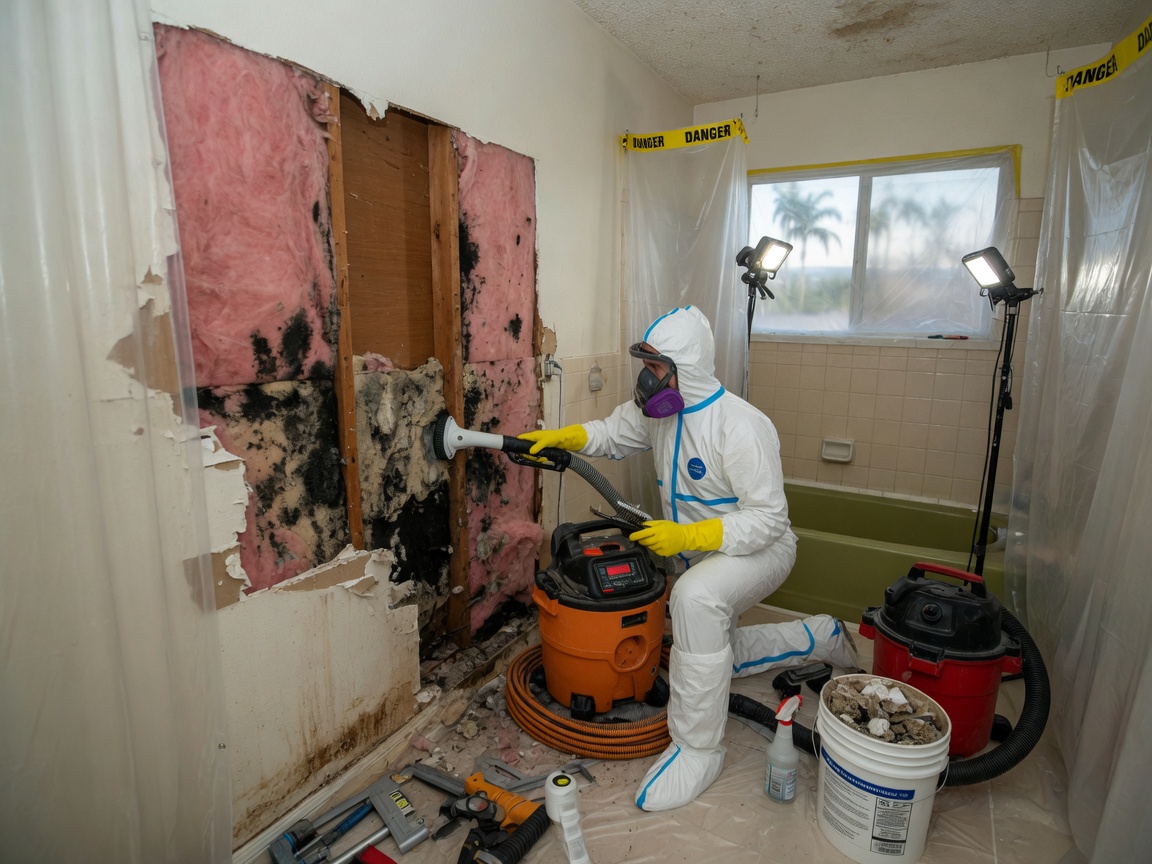
Fontana homes built before the 1990s often have crawl spaces and attics with limited ventilation that trap moisture during the region's long dry summers. When a roof leak or plumbing failure introduces water, mold colonies establish quickly behind drywall and under subfloors. Technicians must map moisture with infrared cameras because visible growth on ceilings frequently signals hidden colonies in wall cavities that extend toward neighboring units in South Fontana duplexes.
San Bernardino County building codes require containment and negative air pressure during removal to prevent spores from migrating into HVAC systems common in North Fontana ranch homes. After demolition of affected materials, HEPA air scrubbing continues until spore counts match outdoor baselines from the Auto Club Speedway area. Homeowners in Rancho Cucamonga and Rialto frequently discover that summer heat accelerates regrowth if dehumidification stops too soon.
Post-remediation verification includes surface sampling and moisture meter readings at multiple depths in framing. This step catches residual dampness in older stucco exteriors that retain water longer than newer vinyl-sided homes in Downtown Fontana. Skipping verification often leads to callbacks when monsoon moisture from distant storms raises indoor humidity again.
Clearance documentation includes photos of removed materials and a written scope that satisfies insurance adjusters working in San Bernardino County. The process protects resale value because buyers in Rialto routinely request mold histories before closing.
Technician insight
In Fontana the thing that catches most people out with Mold Remediation is how quickly summer attic heat pushes moisture into wall tops after a small roof leak near the Auto Club Speedway. Older stucco homes in South Fontana hold that dampness longer than newer builds, so we always pull baseboards and check framing even when growth looks limited to the ceiling.
Hidden Attic Growth After Summer Leak
A North Fontana homeowner noticed ceiling stains after monsoon rain. Inspection revealed mold extending from the attic down wall cavities in a 1970s stucco house. We contained the space, removed insulation and drywall, treated framing, and ran dehumidifiers for five days. Clearance samples matched outdoor levels before we restored the ceilings.
Mold Remediation Services We Offer
✓Attic Mold Removal
Removes colonies from roof decking and insulation in Fontana homes where summer heat drives moisture into poorly vented attics near the Auto Club Speedway.
✓Bathroom Mold Remediation
Treats tile, drywall, and subfloor growth caused by chronic humidity in older South Fontana bathrooms with limited exhaust fan capacity.
✓Crawl Space Mold Treatment
Addresses soil moisture and vapor barrier failures common under North Fontana ranch homes built on expansive clay soils.
✓HVAC Mold Cleaning
Cleans coils, ducts, and plenums after water intrusion events that spread spores through central air systems in Rancho Cucamonga tract homes.
✓Drywall Mold Remediation
Removes and replaces affected wall sections while maintaining negative pressure to protect adjacent rooms in multi-unit buildings near Fontana City Hall.
Mold Remediation Cost in Fontana, CA
| Service | Typical Range | What Affects It |
|---|---|---|
| Small bathroom remediation | $1,200–$2,400 | Limited to one room with no HVAC involvement |
| Attic mold remediation | $2,800–$5,500 | Includes insulation removal and ventilation correction |
| Crawl space treatment | $1,800–$3,600 | Vapor barrier repair and dehumidifier install add cost |
| Whole-home HVAC cleaning | $900–$1,800 | Required when spores have circulated through ducts |
Ranges are typical for Fontana, CA and confirmed with an exact written quote before any work starts.
How it works
- 1
Inspection and Moisture Mapping
Technicians use moisture meters and thermal imaging to locate hidden water in attics, crawl spaces, and wall cavities throughout the property.
- 2
Containment Setup
Plastic barriers and negative air machines isolate the work zone to stop spore migration into living areas or HVAC systems.
- 3
Removal and Cleaning
Affected materials are removed, surfaces are HEPA-vacuumed and treated with EPA-registered antimicrobials, then dried with commercial equipment.
- 4
Verification and Clearance
Post-remediation air and surface samples confirm spore levels match outdoor baselines before barriers come down.
Pricing
Pricing varies by square footage affected, accessibility, and whether HVAC cleaning is required.