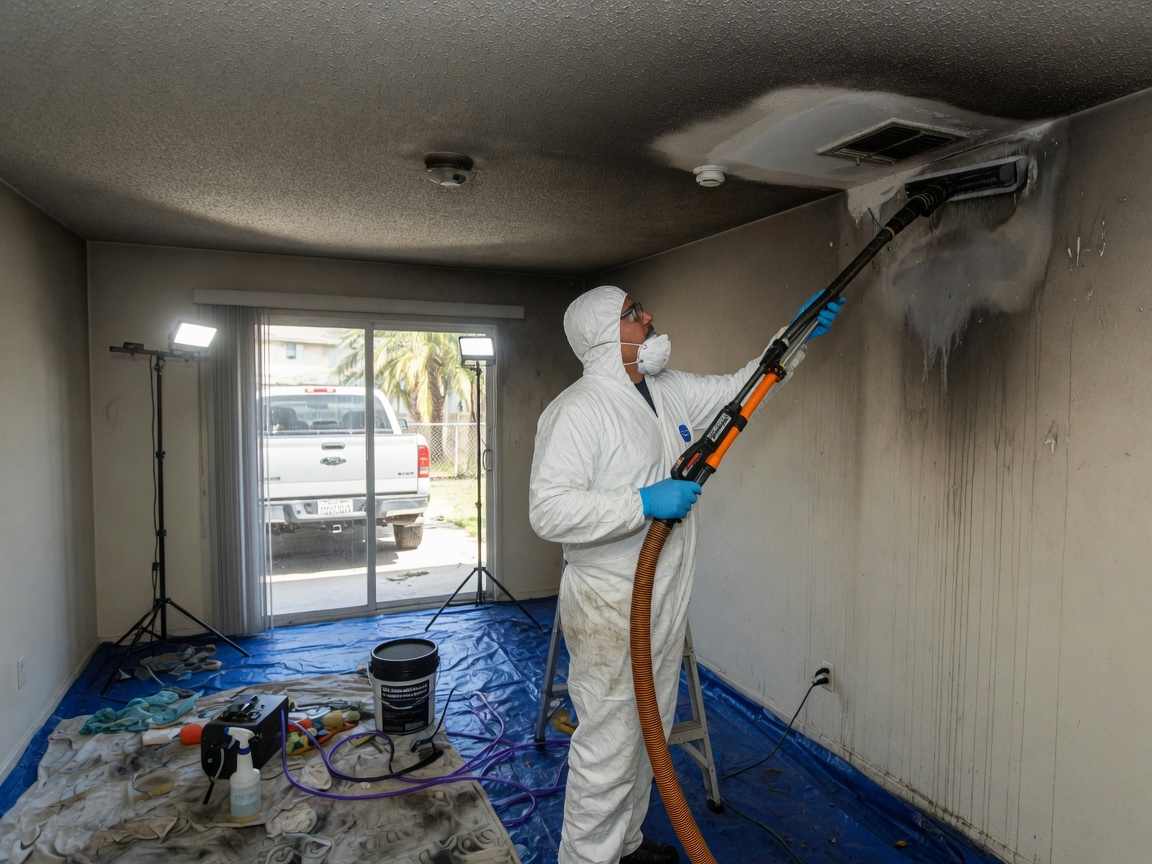
Smoke damage in Fontana spreads differently than in coastal cities because the hot-summer Mediterranean climate pulls moisture out of soot within hours, locking it into drywall, insulation, and concrete block foundations common in South Fontana tract homes built before 1980. Technicians must test for alkaline residues that can etch copper wiring and HVAC coils if left untreated, especially after kitchen or electrical fires near Auto Club Speedway where older single-story homes have limited attic ventilation.
Porous materials such as popcorn ceilings and textured stucco in North Fontana and around Fontana City Hall require different cleaning agents than the hardwood floors found in some Rancho Cucamonga border properties. Failure to neutralize pH levels before sealing often leads to recurring odors when summer temperatures push indoor air past 95 degrees. Crews document every layer removed so insurance adjusters see the actual migration path through shared walls in Rialto-adjacent neighborhoods.
Restoration stops short of full demolition only when thermal imaging confirms smoke has not reached the framing or subfloor. In San Bernardino County homes with slab-on-grade construction, technicians often discover smoke residue has wicked into carpet padding and underlayment, requiring targeted extraction rather than whole-room replacement to keep costs contained.
Technician insight
In Fontana, the thing that catches most people out with Smoke Damage Removal is how quickly the hot-summer Mediterranean climate bakes soot into the textured ceilings and popcorn finishes found in 1970s tract homes near the Auto Club Speedway, making later removal far more destructive than jobs started within the first 48 hours.
Kitchen Fire Smoke In South Fontana
Smoke from a stove fire traveled through the HVAC system into three bedrooms of a 1978 single-story home. Thermal imaging showed residue had settled in the attic insulation above the hallway. Crews contained the zone, cleaned and neutralized drywall surfaces, replaced contaminated insulation, and cleared the system before summer temperatures returned.
Smoke Damage Removal Services We Offer
✓Soot Removal From Drywall and Ceilings
Removes alkaline soot from textured surfaces without damaging original finishes in pre-1990 Fontana homes.
✓HVAC and Duct Cleaning After Smoke Exposure
Extracts residue from ductwork and registers that recirculates through homes in South Fontana during summer heat.
✓Odor Neutralization in Attics and Crawlspaces
Treats trapped smoke odors in poorly ventilated attics typical of North Fontana single-story construction.
✓Content Cleaning and Deodorization
Cleans and restores clothing, furniture, and personal items affected by smoke migration in Downtown Fontana apartments.
✓Wall Cavity and Insulation Replacement
Replaces contaminated insulation behind walls where smoke has traveled through shared framing in Rialto-border homes.
Smoke Damage Removal Cost in Fontana, CA
| Service | Typical Range | What Affects It |
|---|---|---|
| Initial Assessment And Testing | $250–$450 | Higher when multiple levels or HVAC inspection required |
| Soot Removal Per Room | $600–$1,200 | Depends on ceiling height and surface texture |
| HVAC Duct Cleaning | $450–$900 | Increases with older ductwork in South Fontana homes |
| Attic Odor Treatment | $800–$1,500 | Based on square footage and access difficulty |
Ranges are typical for Fontana, CA and confirmed with an exact written quote before any work starts.
How it works
- 1
On-Site Assessment
Technician inspects all affected rooms, tests pH on surfaces, and maps smoke migration through HVAC and wall cavities.
- 2
Containment And Ventilation Setup
Negative air machines isolate the work zone to prevent soot from spreading into unaffected areas of the home.
- 3
Cleaning And Neutralization
Specialized agents remove soot from hard and porous surfaces while monitoring humidity levels during hot weather.
- 4
Final Clearance And Sealing
Air quality testing confirms odors are gone before any necessary sealing or insulation replacement.
Pricing
Pricing varies by square footage affected, number of rooms, and whether HVAC or insulation requires replacement.