
2026-10-28 · Javier Soto
Water Damage From Roof Leaks During Santa Ana Winds in Fontana
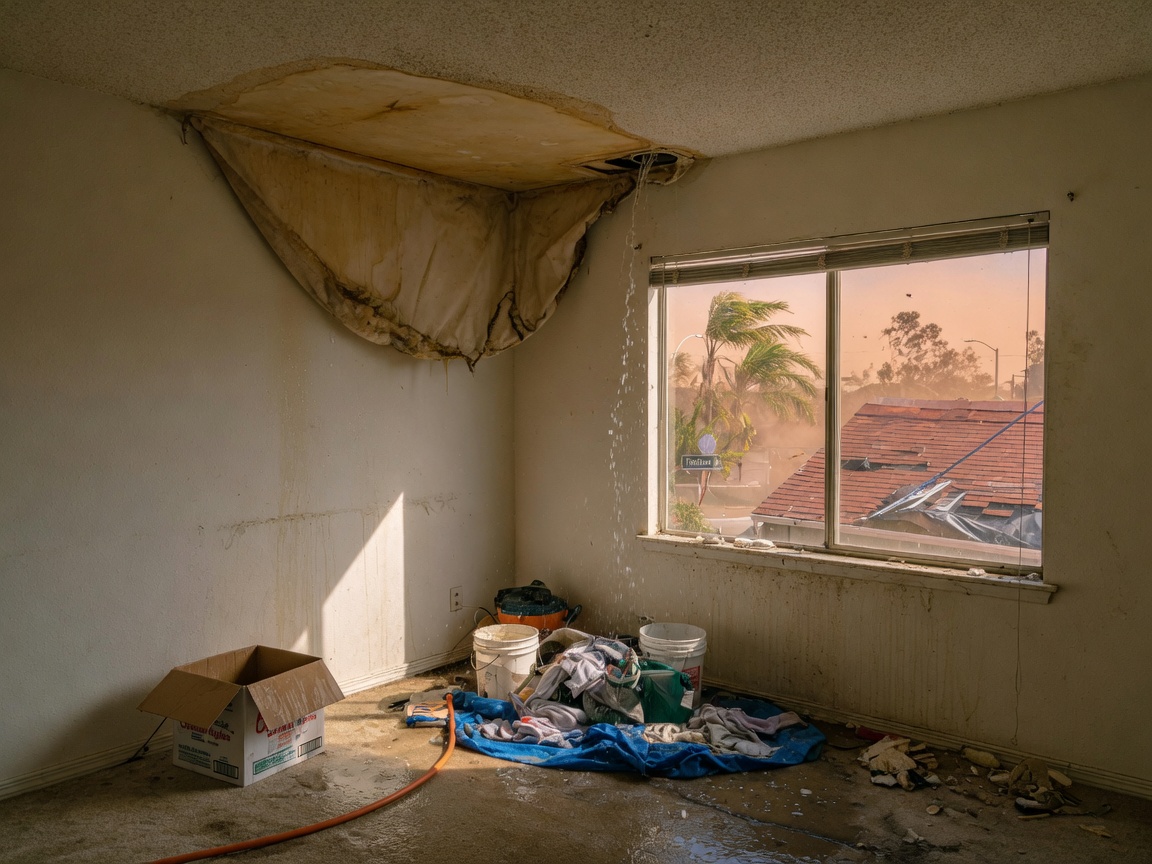
Santa Ana winds in Fontana can push water through roof vulnerabilities in as little as four to six hours, saturating attics and ceilings in homes across South Fontana and North Fontana before residents notice interior signs.
How Santa Ana Winds Interact With Local Roofing in Fontana
Fontana sits in a hot-summer Mediterranean climate where Santa Ana winds arrive most often from October through January, bringing gusts that exceed 40 mph and strip away loose shingles or force rain under flashing. Homes built before 1980 in Downtown Fontana and South Fontana typically feature older composition roofs or clay tiles that have endured decades of thermal expansion and contraction. These conditions create gaps at ridge vents and pipe boots that high winds exploit, allowing water to bypass underlayment and reach plywood sheathing. Wind-driven rain also pools against chimneys and skylights common on single-story ranch houses throughout North Fontana. Once moisture reaches insulation, it spreads laterally along ceiling joists, raising humidity levels that promote mold within 48 hours in the dry but variable air of San Bernardino County. Crews responding to these events routinely document water migration patterns that follow the prevailing wind direction from the northeast, concentrating damage on the southwest-facing slopes of roofs.
Typical Leak Locations and Resulting Interior Damage
Wind pressure during Santa Ana events concentrates on roof edges and penetrations. In South Fontana neighborhoods, leaks frequently appear around bathroom exhaust vents and swamp-cooler curbs where sealant has dried and cracked after 15 years of exposure. Water then travels down rafters and soaks batt insulation above bedrooms, producing brown stains on textured ceilings within one or two rain events. North Fontana properties near the Auto Club Speedway often show damage at valley flashings where debris from surrounding hills collects and blocks drainage. When water reaches drywall, it wicks upward 12 to 18 inches, softening joint compound and causing tape to separate. Attic ductwork in these homes can also collect condensation once humidity spikes, dripping onto furnace platforms. Owners in Rancho Cucamonga and Rialto report similar patterns because the same wind corridor affects the entire corridor between the San Gabriel and San Bernardino mountains.
First Response Steps Before Professional Arrival
Homeowners should place tarps over the most obvious roof breaches once winds subside, using furring strips to secure edges without driving new fasteners into wet sheathing. Inside, they can set fans on high in affected rooms while keeping HVAC systems off to avoid circulating spores. Removing wet carpet pads within 24 hours limits bacterial growth, especially in slab-on-grade homes common in Fontana. Documenting ceiling discoloration with dated photos helps track moisture migration before extraction equipment arrives. Residents should avoid walking on saturated drywall to prevent collapse onto furnishings below. These measures buy time until technicians can set up moisture meters and begin removing standing water from attics.
Long-Term Risks and Restoration Considerations
Untreated water from roof leaks during Santa Ana events often leads to hidden mold colonies behind baseboards and in wall cavities of older Fontana housing stock. Properties in areas like Downtown Fontana with original plaster walls require slower drying protocols to avoid cracking the substrate. Structural drying equipment must run continuously for three to five days to bring moisture content below 12 percent in framing lumber. When insulation is compressed and wet, full removal prevents recurring odors that travel through HVAC returns. Linking to related guidance on mold after appliance leaks helps readers understand how similar moisture sources produce different growth patterns depending on season and wind exposure. In cases where leaks recur, roof leak repair coordinated with water damage restoration prevents repeated interior claims.
Coordinating With Local Restoration Services
Quality Construction restoration operates 24 hours from its base in Fontana and responds to wind-driven roof leaks across South Fontana, North Fontana, and nearby cities including Rialto and San Bernardino. Technicians use thermal imaging to locate moisture behind stucco and drywall without invasive demolition, then extract water through small access points before applying antimicrobial treatments. For homes showing widespread attic saturation, structural drying protocols include dehumidifiers sized to the square footage of the affected space. Readers dealing with older neighborhoods can review additional steps in the article on burst pipe water damage in older Fontana neighborhoods to compare drying timelines. When damage extends into living spaces, content cleaning crews inventory and treat salvageable items on-site before returning them once humidity stabilizes.