
2026-10-28 · Javier Soto
Mold Risks After Appliance Leaks in Fontana Kitchens
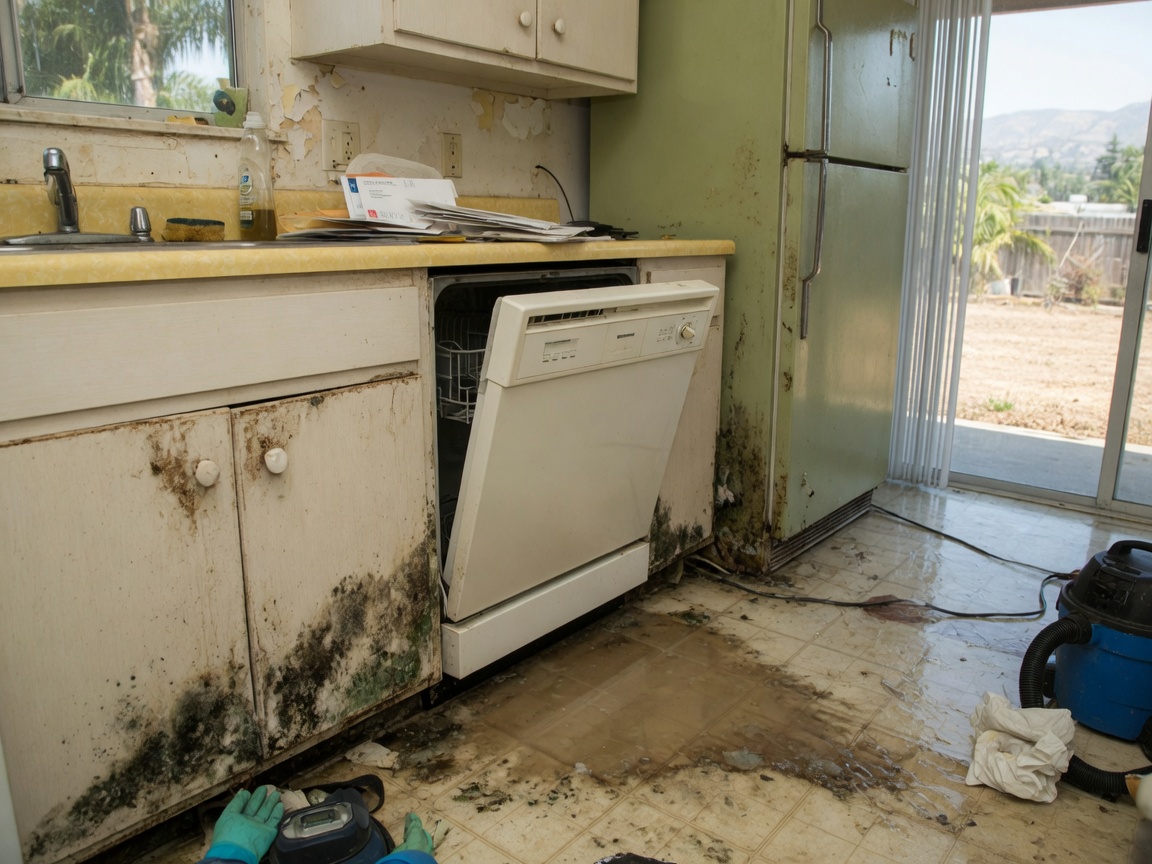
Mold growth after an appliance leak in a Fontana kitchen can begin within 24-48 hours when moisture meets the area's hot-summer Mediterranean climate. Kitchens in South Fontana homes built before 1990 often have older 40-gallon water heaters and dishwashers that leak behind cabinets, trapping water against drywall and subfloors. Once temperatures climb above 80°F in summer, spores activate fast on organic materials like wood and drywall paper. North Fontana properties near the Auto Club Speedway face similar issues when refrigerator lines fail during peak heat. Early detection prevents hidden colonies from spreading into walls shared with adjacent rooms.
Appliance Leaks Common in Older Fontana Kitchens
Fontana's housing stock includes many ranch-style homes from the 1960s through 1980s in South Fontana and around Fontana City Hall, where original appliances have reached the end of their 8-12 year lifespan. Dishwasher drain hoses crack and release water under cabinets, while refrigerator ice-maker lines leak onto tile or laminate floors. These slow leaks often go unnoticed until black spots appear on baseboards or a musty smell emerges. In Downtown Fontana rentals, tenants may overlook small puddles that soak into particleboard cabinet bases. The hot climate dries surface water quickly but leaves moisture trapped in wall cavities, creating ideal conditions for mold colonies to establish behind the scenes.
How Local Climate Accelerates Mold After Leaks
San Bernardino County's hot-summer Mediterranean pattern brings daytime highs that frequently exceed 95°F from June through September, driving evaporation that pushes humidity into enclosed kitchen spaces. When an appliance leak occurs during these months, moisture evaporates from visible floors yet lingers in cooler under-cabinet areas and behind appliances. This cycle repeats daily, feeding mold on drywall and insulation. Properties in North Fontana near the Cajon Pass experience added wind that can push spores through small gaps. Homeowners who notice musty odors after a leak should check behind the dishwasher and refrigerator immediately rather than waiting for visible signs.
Hidden Risks in Walls and Cabinets
Leaks from garbage disposals or sink sprayers often travel along plumbing lines into wall cavities in typical Fontana kitchens. Once water reaches the paper facing on drywall, mold can colonize within 48 hours under summer conditions. Cabinets in Rialto-adjacent neighborhoods frequently sit on concrete slabs that retain moisture longer than raised floors, extending the window for growth. Removing baseboards reveals staining that signals deeper issues. Without prompt drying, spores spread through HVAC returns common in single-story homes throughout San Bernardino County.
Practical Steps After Discovering a Leak
Shut off water to the appliance at the first sign of moisture, then extract standing water with towels and a wet vac. Run fans and dehumidifiers to lower humidity below 50% within the first 24 hours. Pull back vinyl flooring or lift carpet edges near the leak site to inspect subfloors. Document the affected area with photos before any demolition. Residents in Rancho Cucamonga and nearby areas often face the same timeline pressures during heat waves.
For persistent moisture or visible growth, professional assessment prevents larger issues. Water Damage Restoration teams use moisture meters to locate hidden pockets that homeowners miss. Mold Remediation addresses colonies that have already formed behind cabinets. Review the Water Damage Repair Timeline for Fontana Rental Properties for guidance on handling leaks in leased homes common across South Fontana.