
2026-10-28 · Javier Soto
Preventing Secondary Damage After Minor Flooding in South Fontana
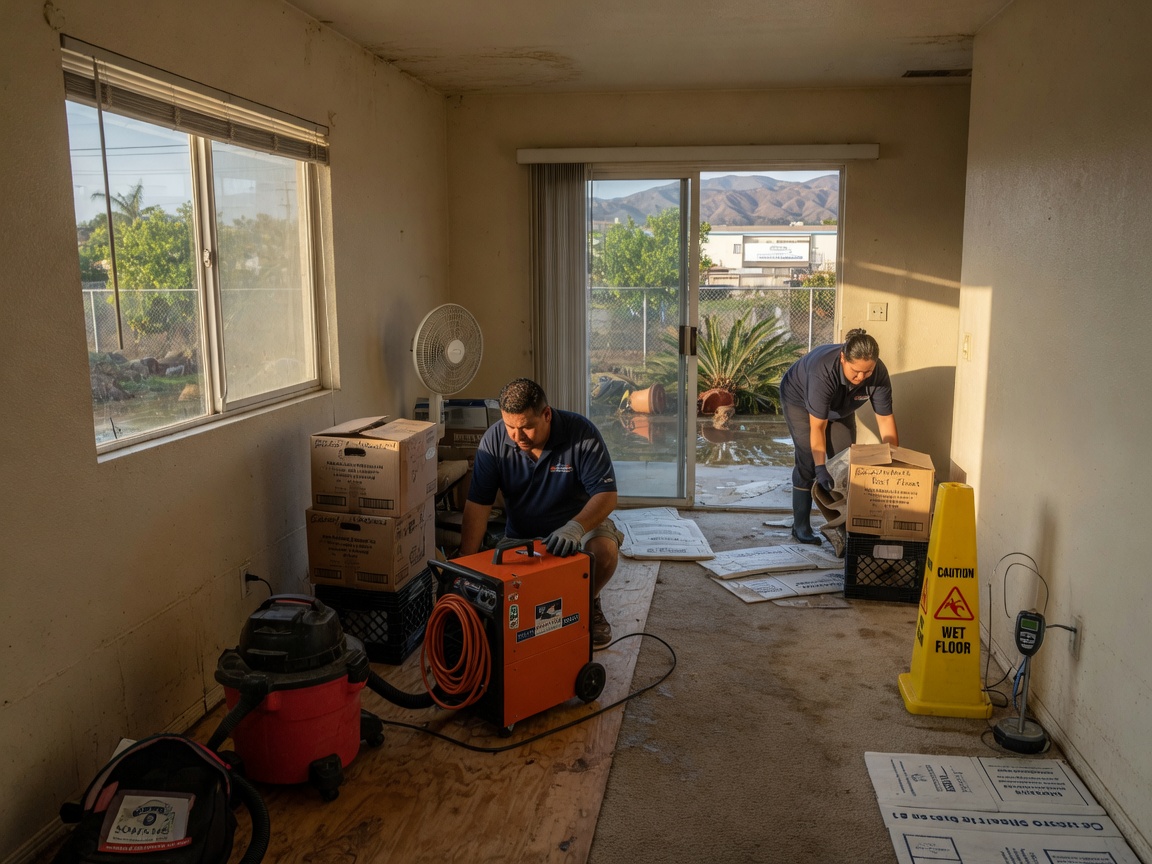
To prevent secondary damage after minor flooding in South Fontana, extract standing water and begin drying within the first 24 hours while keeping indoor humidity below 50 percent. South Fontana's mix of older single-family homes and the hot-summer Mediterranean climate creates conditions where even small leaks can migrate into wall cavities and subfloors fast, especially during winter rains that follow dry summers.
Assessing the Flood Impact in South Fontana Homes
Start by locating every wet surface, including carpets, baseboards, and drywall up to 12 inches above the water line. In South Fontana neighborhoods near the Auto Club Speedway, many homes built before 1990 have slab foundations that trap moisture beneath tile or vinyl, allowing it to wick into framing. Check adjacent rooms even if they stayed dry on the surface, because water travels along joists toward Fontana City Hall's direction in the flatter terrain. Document affected materials with photos before removal so you can track progress. If the water came from outside during a storm, inspect window wells and grading around the foundation, since poor drainage in South Fontana's clay-heavy soils keeps moisture near the house longer than in nearby Rancho Cucamonga.
Rapid Extraction and Initial Drying
Remove as much water as possible with a wet vac or submersible pump before any drying equipment runs. Once bulk water is gone, open windows on cooler evenings when outside air drops below indoor temperatures, but close them during peak afternoon heat to avoid pulling humid air inside. Place fans to create cross-ventilation across the wettest zones, aiming airflow parallel to floors rather than straight down. In South Fontana's typical 90-plus degree summer days, this step alone can cut drying time by half compared with sealed-up rooms. Move furniture and belongings to dry areas immediately so they do not reabsorb moisture from the air.
Thorough Structural Drying Techniques
After initial extraction, professional structural drying equipment such as air movers and dehumidifiers must run continuously until moisture readings reach pre-loss levels. South Fontana homes often have stucco exteriors that hold heat, so interior walls can stay damp even when the room feels dry. Check moisture content in drywall, wood studs, and concrete every 24 hours; readings above 15 percent on wood or 4 percent on concrete signal hidden pockets that will feed mold later. Run dehumidifiers until relative humidity stabilizes below 50 percent for at least two full days. This process usually takes 3–5 days for minor events but stretches longer if water reached insulation or underlayment.
Preventing Mold and Hidden Damage
Mold colonies can begin forming within 48 hours in the warm, humid pockets common after South Fontana flooding. Remove and discard wet drywall or carpet padding rather than attempting to salvage them, because trapped spores survive standard cleaning. For areas that stayed only slightly damp, apply an EPA-registered antimicrobial to studs and subfloors, then seal with a moisture-barrier primer. If you notice a musty smell returning after drying, schedule mold remediation before finishes are replaced. South Fontana's older plumbing in North and South neighborhoods makes bathroom and laundry walls especially prone to hidden saturation that shows up weeks later.
Long-Term Monitoring and Maintenance
Continue checking moisture levels weekly for the first month using a pin meter on baseboards and around outlets. In South Fontana's climate, even small residual moisture can reappear during the next rain event. Improve grading so water flows away from the foundation at least 6 inches over 10 feet, and clean gutters before winter storms arrive. Residents in nearby Rialto and San Bernardino follow the same routine because the same weather patterns affect the whole San Bernardino County corridor. For rental properties, keep records of drying times and meter readings to support future insurance claims, as outlined in the Water Damage Repair Timeline for Fontana Rental Properties. Regular checks also help spot issues early, similar to the guidance in Checking for Hidden Water Damage in Fontana Bathrooms.