
2026-10-28 · Javier Soto
Checking for Hidden Water Damage in Fontana Bathrooms
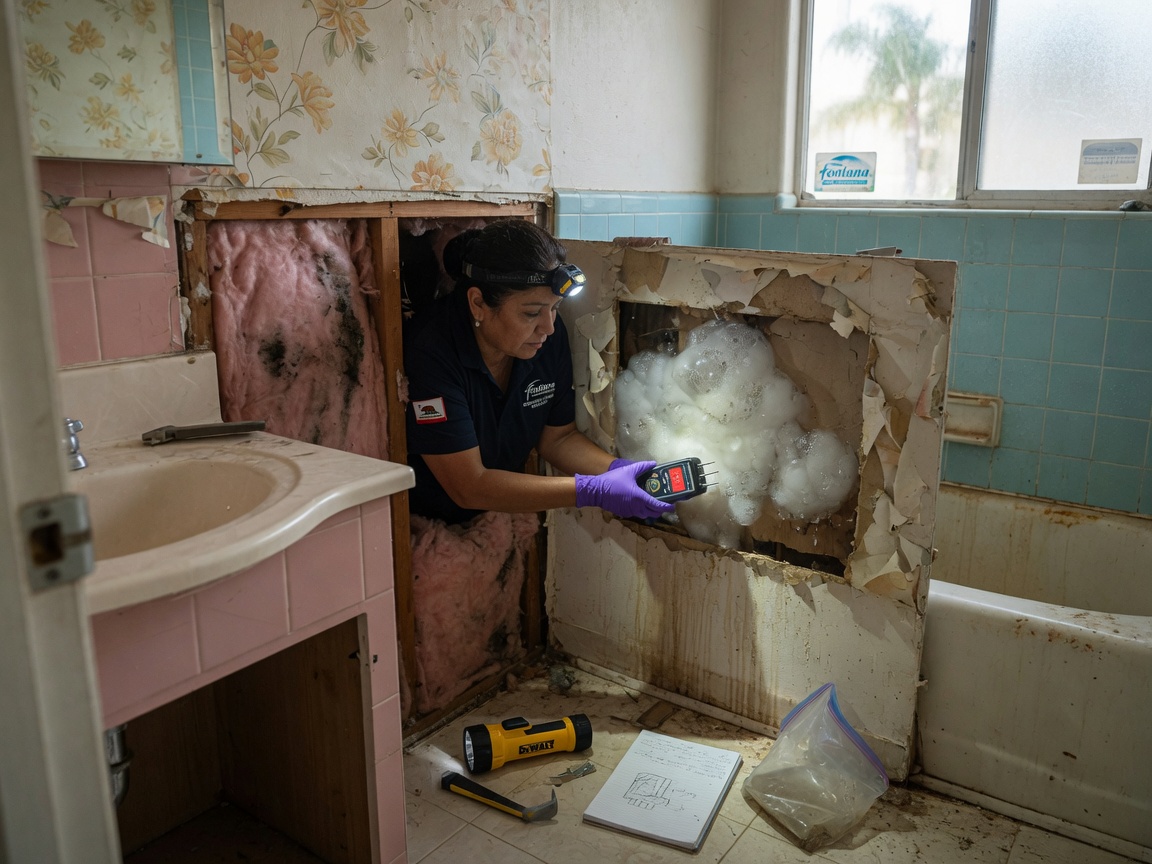
In Fontana bathrooms, hidden water damage typically appears first as musty odors or slight floor softness within weeks of a small leak, and checking behind baseboards with a moisture meter catches it before mold spreads. Older tile showers in South Fontana homes lose grout integrity faster during summer heat spikes, allowing moisture to wick into drywall shared with hallways. Homeowners in North Fontana near the Auto Club Speedway see similar patterns when pipe joints expand and contract with daily temperature swings. A thorough check starts at the shower pan edges, moves to vanity cabinet backs, and finishes by pressing on baseboards for give. These steps reveal leaks from failed caulk or slow drips that never reach the floor surface. Acting early prevents the need for larger repairs that affect multiple rooms.
Common Causes of Bathroom Leaks in Fontana Homes
Fontana's hot-summer Mediterranean climate drives repeated expansion and contraction in plumbing lines, especially in homes built before modern PEX piping became standard. In South Fontana, many bathrooms share walls with laundry areas where dryer vents pull air across wet tile, speeding evaporation that hides active leaks. Downtown Fontana properties near City Hall often have original cast-iron drains that corrode at the trap under the tub, sending water along floor joists toward the kitchen below. Rancho Cucamonga and Rialto residents report similar failures when high summer humidity combines with occasional winter rains that overwhelm roof flashings tied into bathroom vents. Checking the overflow plate on tubs and the seal around toilet bases catches these issues before they reach subfloors. Seasonal temperature swings also loosen shower door tracks, allowing water to pool at the threshold and migrate into adjacent carpet in living areas.
Step-by-Step Inspection for Hidden Damage
Begin by turning off the bathroom exhaust fan and listening for running water after all fixtures are off, which reveals slow valve leaks common in San Bernardino County homes. Next, remove the toe-kick under vanities and shine a flashlight along the cabinet floor for dark staining or white mineral deposits left by evaporating moisture. Press firmly on drywall above the tub surround; any give indicates saturation behind the tile. Use a moisture meter on the wall shared with the shower and record readings above 15 percent, which signals active intrusion in the local climate. Lift a corner of vinyl flooring near the toilet to inspect the subfloor for dark lines along the joints. Finally, check the ceiling below a second-story bathroom for faint brown rings that appear after repeated small leaks. These steps take under thirty minutes and identify problems before they require water damage restoration.
When to Involve Professionals in San Bernardino County
If moisture meter readings stay elevated after 48 hours of ventilation or if black spotting appears along grout lines, contact a restoration team familiar with Fontana's housing stock. Professionals bring thermal imaging cameras that detect temperature differences behind tile without demolition, a tool especially useful in North Fontana homes with multiple layers of remodels. They also trace leaks to their source in slab foundations common throughout the area, preventing repeated callbacks. When damage reaches the subfloor or affects shared walls with neighboring units in multi-family buildings near Rialto, extraction and drying must happen quickly to avoid structural compromise. Homeowners who notice recurring musty smells after rain should schedule an assessment rather than rely on fans alone, since the Mediterranean climate brings humidity spikes that slow natural drying. Early professional involvement limits the scope to the bathroom rather than spreading into hallways or adjacent bedrooms.
Preventing Secondary Issues After Detection
Once signs appear, increase ventilation by running the exhaust fan for twenty minutes after every shower and wiping down tile edges daily during peak summer heat. Replace caulk around tubs and showers every two to three years, choosing mildew-resistant formulas suited to local humidity levels. In South Fontana, where many homes sit on flat lots with minimal drainage slope, ensure downspouts direct water away from foundation walls that support bathroom plumbing. Installing a water alarm under the sink provides early warning for slow valve drips before they reach drywall. For readers dealing with appliance-related moisture, see our guide on mold risks after appliance leaks in Fontana kitchens. Addressing small issues promptly also reduces the chance of needing mold remediation later. Quality Construction restoration remains available 24 hours at our Fontana base to support these checks when homeowners prefer hands-on guidance.