2026-10-06 · Miguel Santos
Handling Contaminated Water From Street Flooding in Fontana
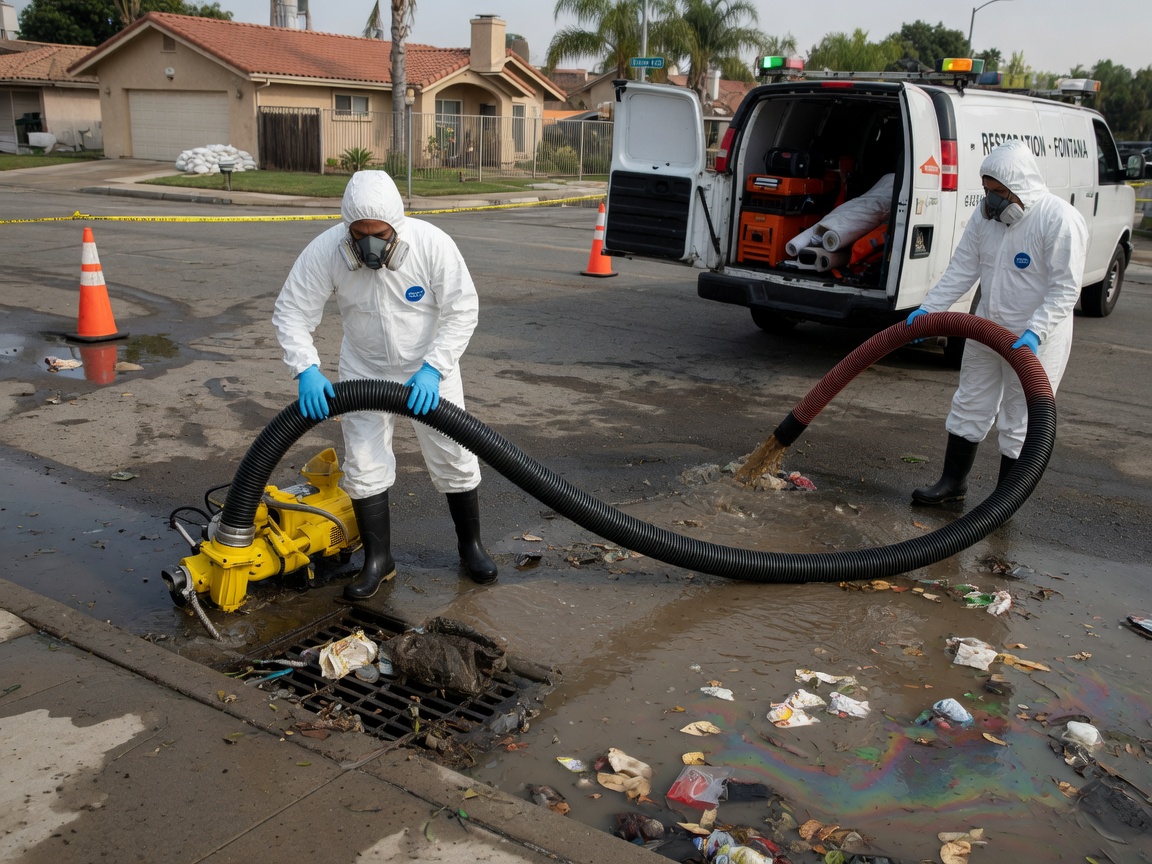
Contaminated water from street flooding in Fontana demands immediate isolation of the affected zone and professional extraction within the first 24 hours to limit bacterial spread from San Bernardino County runoff. Older housing stock in South Fontana and Downtown Fontana absorbs water faster through cracked foundations, while North Fontana properties near Auto Club Speedway face additional debris from nearby roads during heavy winter rains.
Risks of Contaminated Floodwater in Fontana
Street flooding mixes with vehicle fluids, sewage, and soil from San Bernardino County terrain, creating Category 3 water that carries pathogens into homes. In the hot-summer Mediterranean climate, winter storms drop several inches of rain quickly, overwhelming older storm drains around Fontana City Hall and in South Fontana. This leads to rapid saturation of crawl spaces and slab foundations common in 1960s-1980s builds. Prolonged exposure raises mold risk within 48 hours once temperatures climb above 70 degrees in spring. Nearby cities like Rialto and Rancho Cucamonga see similar patterns where runoff travels across shared valleys, carrying contaminants farther than expected.
Immediate Actions for Street Flooding Events
Evacuate the property if water depth exceeds six inches and avoid contact with any standing pools near streets. Shut off electricity at the main panel if safe, then document water levels with photos before water recedes. Do not attempt to pump floodwater yourself, as it often contains hidden chemicals that require specialized containment. Focus on moving valuables to higher ground in unaffected rooms while waiting for extraction crews. In North Fontana near the Auto Club Speedway, wind-driven rain can push debris into yards, complicating access routes during the initial response.
Extraction and Drying for Local Homes
Professional teams use truck-mounted pumps rated for 500 gallons per minute to remove bulk water from basements and garages common in South Fontana. Air movers and dehumidifiers then target moisture trapped in drywall and subfloors, running 3-5 days depending on home age. Flood damage cleanup addresses the full scope when street water enters living spaces. Follow-up moisture mapping with infrared cameras catches hidden pockets in concrete slabs typical of Rancho Cucamonga border homes. This process reduces secondary mold growth that often appears in San Bernardino County properties after repeated winter events.
Long-Term Prevention and Monitoring
Install French drains around South Fontana homes built before 1980 to redirect street runoff away from foundations. Check sump pumps annually before the rainy season, as power outages during storms can allow re-flooding. Cost guide for water damage restoration in Fontana outlines typical drying timelines for local soil types. Monitor for musty odors in the months after an event, especially in North Fontana where clay-heavy soil holds moisture longer. How to handle burst pipe water damage in older Fontana neighborhoods provides related guidance for properties already stressed by prior flooding.