2026-10-06 · Miguel Santos
Drying Out Water Damaged Carpets in Fontana Homes
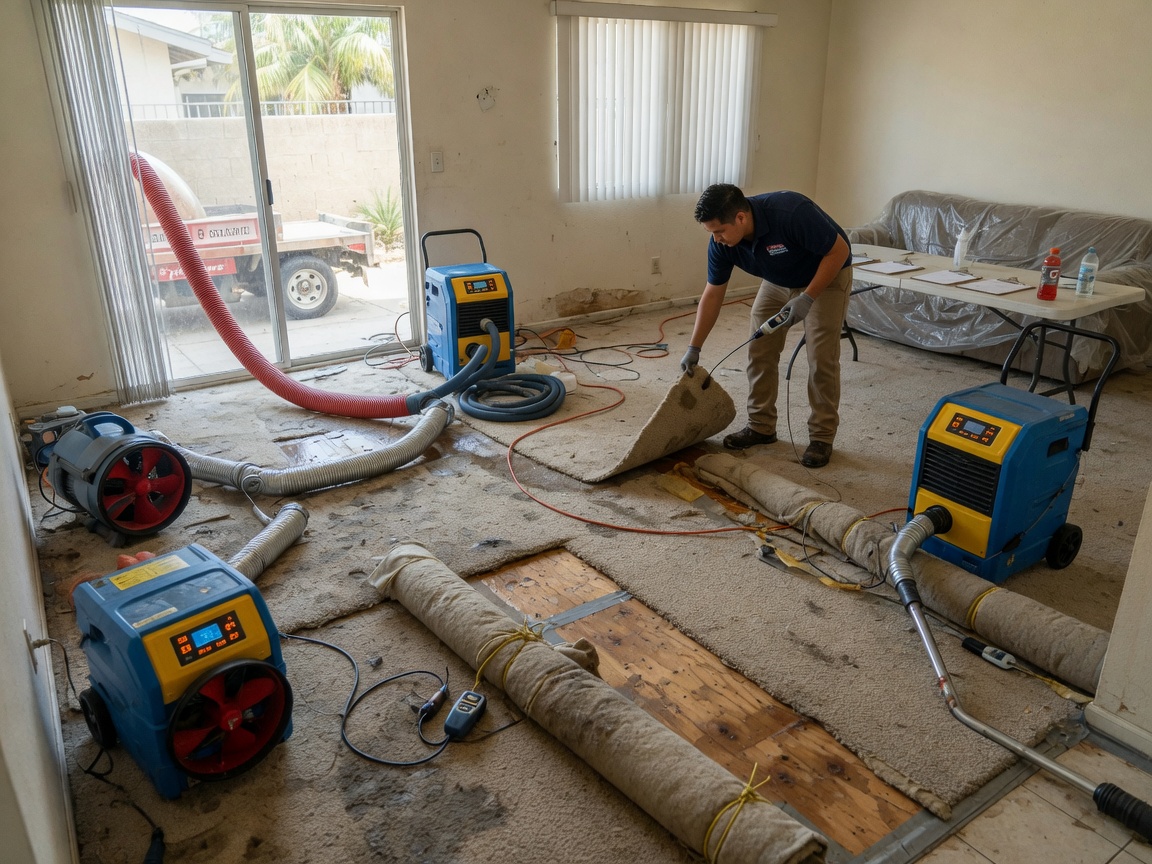
Water damaged carpets in Fontana homes can usually be dried out in 48 to 96 hours when water is extracted immediately and industrial drying equipment is applied without delay. Delays beyond that window often lead to mold in older carpet pads or subfloors common in South Fontana and Downtown Fontana properties. The process starts with removing standing water, then isolating affected areas to prevent spread into nearby rooms or hallways.
Assessing Carpet Saturation Levels
Homeowners first need to determine how deeply water has penetrated the carpet and pad. In North Fontana neighborhoods with newer slab-on-grade construction, moisture often pools under the carpet backing against the concrete, requiring moisture meters to map the full extent. Older homes near Fontana City Hall may have thicker pads that hold water longer, extending drying times by a full day. Checking baseboards and adjacent drywall for wicking is essential because hidden moisture behind trim can re-soak carpets after initial drying. Professional restorers use these readings to decide whether the pad must be removed or if air can reach it in place.
Extraction Before Drying Begins
Removing as much water as possible within the first few hours prevents carpets from staying saturated. Emergency water extraction crews use truck-mounted units that pull water from both carpet and pad faster than portable machines. In homes near Auto Club Speedway, where driveways and garages often sit at grade, floodwater from winter rains can enter quickly and require multiple passes. Skipping thorough extraction forces dehumidifiers to work harder and raises the risk of pad separation or backing delamination. Once visible water is gone, crews lift edges of the carpet to allow airflow underneath while protecting furniture legs with blocks.
Equipment Setup for Effective Drying
Industrial air movers and dehumidifiers positioned correctly achieve the 48-to-96-hour timeline. Structural drying teams place low-profile fans under carpet edges and direct airflow across the surface while maintaining 70 to 80 degrees Fahrenheit inside the home. In Fontana's hot-summer Mediterranean climate, outdoor humidity spikes during rare winter storms can slow evaporation, so closed-loop dehumidification is required rather than open windows. Technicians monitor daily moisture readings and adjust equipment placement every 12 hours to target remaining wet zones near walls or door thresholds. This systematic approach keeps secondary damage from reaching nearby hardwood or tile in the same room.
Local Climate and Housing Factors
Fontana's location in San Bernardino County brings distinct challenges for carpet drying. Summer heat can accelerate surface drying yet trap moisture deeper in pads if airflow is insufficient, while winter rains create sudden saturation events in South Fontana and Rialto-adjacent homes. Concrete slabs common throughout the area hold temperature and slow evaporation compared with raised wood floors found in some Rancho Cucamonga properties. Crews account for these conditions by increasing dehumidifier capacity during humid periods and sealing off rooms to maintain negative pressure. Homeowners in these neighborhoods benefit from understanding that drying times lengthen when outdoor dew points remain high for several days.
When to Consider Replacement
Carpets that remain wet beyond 96 hours or show signs of delamination usually require replacement rather than continued drying attempts. Padding that has separated from the backing or developed odor after initial drying efforts cannot be salvaged safely. In such cases, removing the carpet entirely allows inspection of the subfloor for warping or hidden mold before new material is installed. What to expect during water damage restoration in Fontana outlines the inspection steps that follow when drying efforts reach this point.