
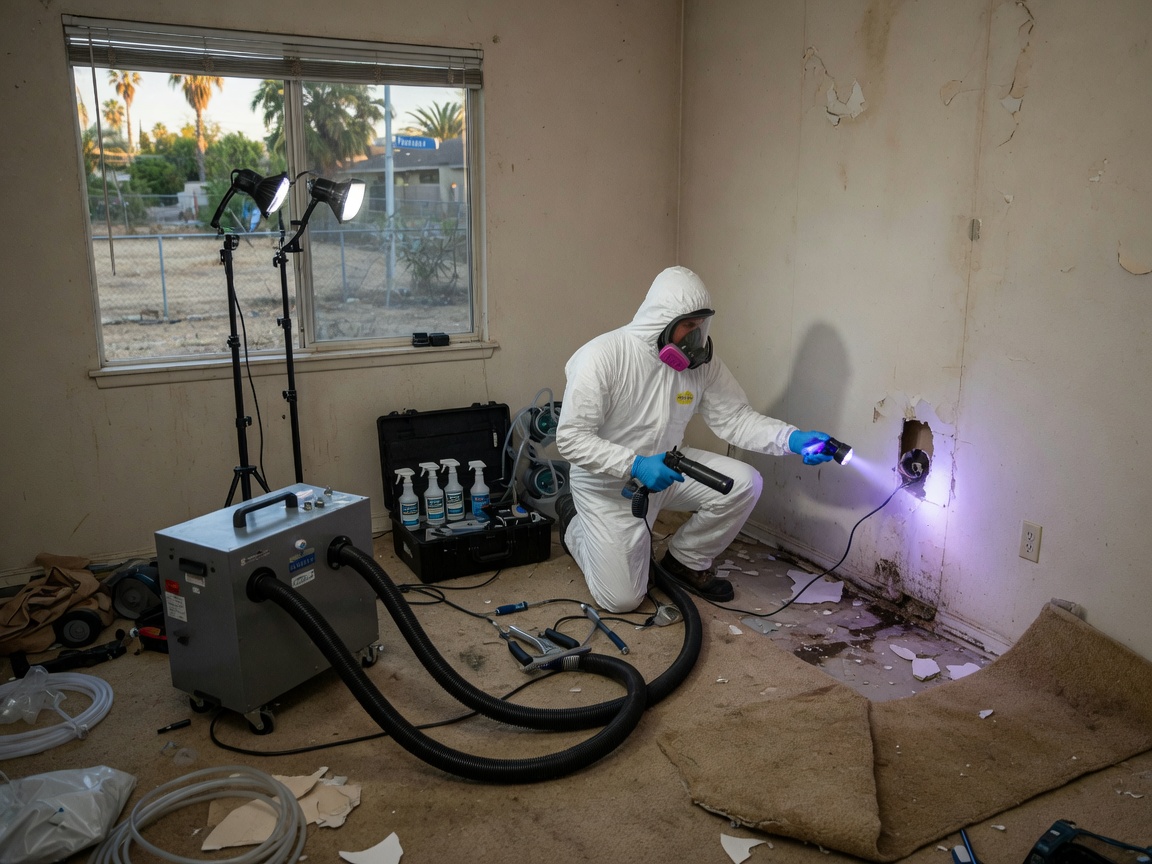
Older housing stock in South Fontana and around Fontana City Hall often features plaster walls and hardwood subfloors that trap smoke and moisture odors long after the initial event. In a hot-summer Mediterranean climate, daytime heat pulls residual VOCs out of porous materials during the day while cooler nights cause condensation that restarts the cycle. Technicians must use thermal fogging combined with hydroxyl generators rather than simple ozone units because many homes here sit close to the 210 freeway corridor and already carry background hydrocarbon loads.
North Fontana tracts built after 2005 typically have tighter envelopes and spray-foam insulation that can hide water damage behind vapor barriers. When sewage or flood odors appear, crews cut inspection ports every six linear feet along base plates instead of relying on moisture meters alone. San Bernardino County air-quality rules limit solvent-based deodorizers near schools, so enzyme and probiotic treatments become the default on jobs within two miles of Auto Club Speedway.
Rialto and Rancho Cucamonga properties share the same granitic soil that drains quickly yet holds salts; those salts wick upward through slab cracks and carry musty odors into living spaces. Restoration teams therefore combine sub-slab depressurization with surface sealers rated for 15 psi vapor drive rather than standard epoxy coatings. Homeowners who skip the final HEPA air scrubbing step usually see odors return within one heat wave.
Technician insight
In Fontana the thing that catches most people out with odor removal is how the hot afternoons pull trapped moisture and smoke out of the 1970s lath-and-plaster walls in South Fontana homes; if you seal the room too early the odor returns the next time the temperature hits 95 degrees.
Post-fire odor in South Fontana residence
A kitchen fire near Fontana City Hall left smoke in wall cavities of a 1968 single-story home. Inspection found charred studs still off-gassing behind new drywall the owner had installed. Crews opened the cavities, removed insulation, applied thermal fog, and ran hydroxyl units for five days until air samples cleared.
Odor Removal Services We Offer
✓Smoke Odor Removal After Fire
Removes embedded smoke residues from drywall, ductwork, and insulation common after structure fires in older South Fontana neighborhoods.
✓Water Damage Odor Elimination
Neutralizes musty and sewage odors left by appliance leaks or storm flooding that saturate slab foundations typical in North Fontana.
✓Mold Odor Treatment
Treats microbial volatile organic compounds behind walls and under cabinets in homes near Downtown Fontana where irrigation overspray keeps crawl spaces damp.
✓Sewage Backup Odor Remediation
Extracts and deodorizes protein-based odors from gray and black water events that affect garages and lower levels in Rialto and San Bernardino border homes.
✓HVAC Duct Odor Cleaning
Removes trapped cooking and smoke odors from metal and flex duct runs that recirculate through single-story ranches common around Auto Club Speedway.
Odor Removal Cost in Fontana, CA
| Service | Typical Range | What Affects It |
|---|---|---|
| Single-room smoke odor treatment | $450–$850 | Higher in older plaster homes near Downtown Fontana |
| Whole-home water damage odor cleanup | $1,200–$2,800 | Varies with slab leaks common in North Fontana tracts |
| HVAC duct odor remediation | $600–$1,100 | Includes register cleaning and fogging |
| Sewage odor extraction and treatment | $900–$1,900 | Includes subfloor drying and enzyme application |
Ranges are typical for Fontana, CA and confirmed with an exact written quote before any work starts.
How it works
- 1
Source Identification
Technicians walk the property with moisture meters and thermal cameras to locate hidden water or char that continues feeding the odor in Fontana's temperature swings.
- 2
Containment And Airflow Setup
Negative air machines with carbon filters isolate affected rooms so odors do not migrate into unaffected areas of the home.
- 3
Deep Cleaning And Treatment
Porous materials are cleaned or removed, then surfaces receive enzyme or hydroxyl treatments calibrated for the specific odor chemistry.
- 4
Verification And Clearance
Third-party air sampling confirms odor compounds fall below sensory thresholds before equipment is removed.
Pricing
Most odor removal projects fall between several hundred and a few thousand dollars depending on square footage and material porosity.